
The Harvest Is Plenty, but the Laborers Are Few
During the month of February, the United States celebrates Black History Month (BHM). Founded by historian Carter G. Woodson, BHM began as a week to honor Frederick Douglass’ birthday and the contributions of many other Black Americans to the development of the United States. BHM emerged as a self-proclamation among Black Americans in response to the frequent exclusion of Black experiences from the national narrative or their reduction solely to the history of chattel slavery. A persistent question among Black people in the United States asks, “Does anybody else care about our plight?”
I believe this question addresses concerns both from Black Americans and all of humanity. Does anyone else really care? How long will we be ignored? Will we wait until the destruction comes knocking on non-Black people's doors? These questions continue to test the vibrancy of our organization. In my time with BPFNA~Bautistas por la Paz, from an individual member to serving as Interim Executive Director, I continue to reflect on Jesus’ first lament in the introductory part of his ministry where He claimed: “the harvest is plentiful, but the laborers are few” (Matt 9:37).
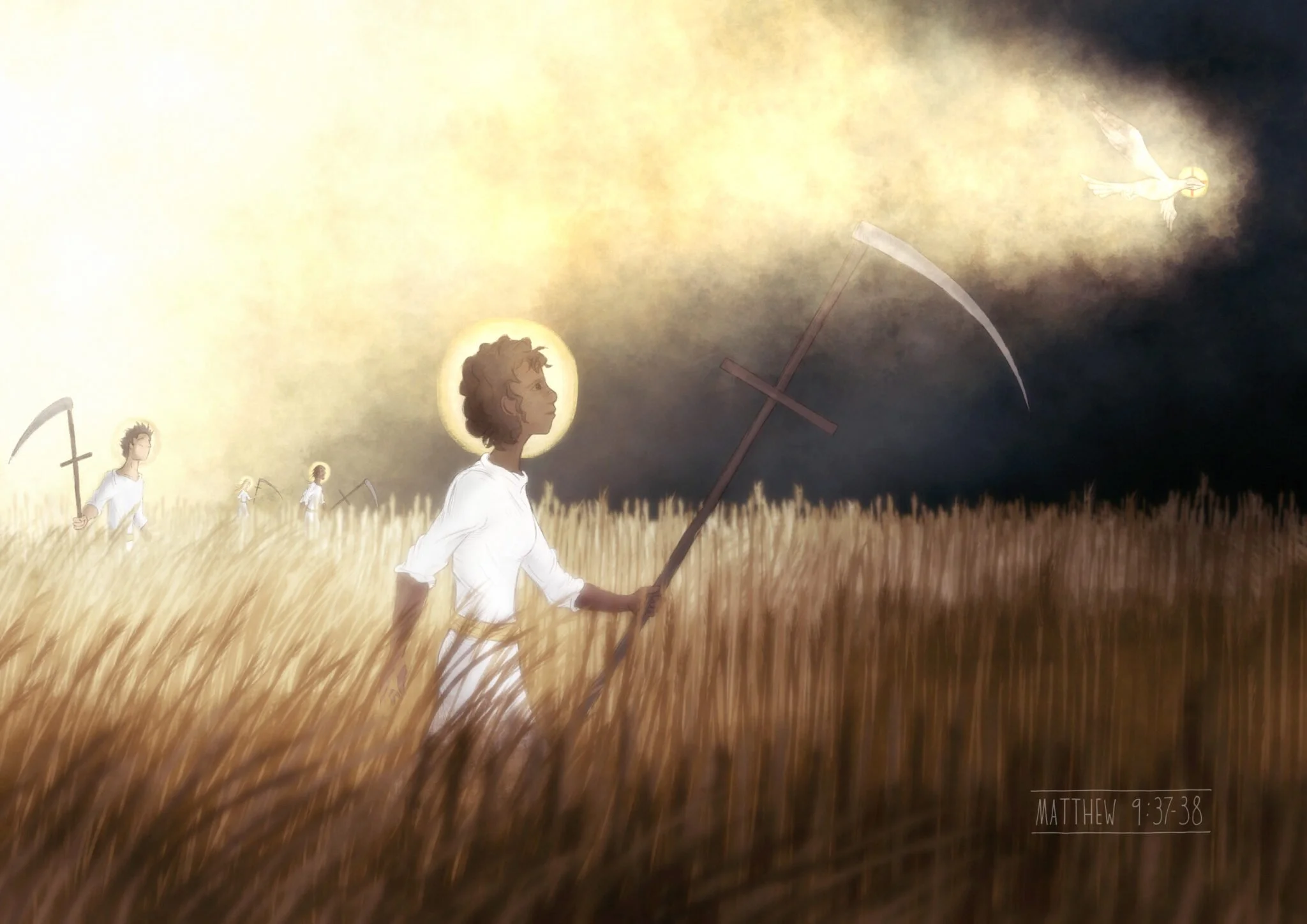
The Harvest
How long will the conservation, care, and flourishing of the world be neglected in matters of ecological responsibility and environmental justice?
How long will First Tribes, First Nations, and Indigenous peoples—from Africa to the Amazon and across the Americas—continue to be ignored?
How long will genocide, oppression, colonialism, war, greed, white supremacy, xenophobia, and violence, whether acknowledged or denied, remain the driving forces of our shared life?
How long will we seek freedom from harm while failing to cease the harm we inflict on others, harm that was once inflicted on us?
These questions lie at the heart of the crises facing our world. They also expose the ways these same patterns manifest within us, generating future brokenness. Their urgency demands both social transformation and deep self-examination, which is why our tradition calls us together as collaborators in the work of justice and liberation.
The Laborers
My Old Testament professor challenged both me and my classmates when he said: “as bad as you want to change everything; just focus on contributing to change; God will make the change.”
When I consider the white supremacy that continues to distort our ways of being, I give thanks for the leadership of Rev. Dr. Kadia Edwards-Rowe and for our partnership with the Samuel DeWitt Proctor Pastors Conference.
“We are called to sustain both the passion with which we engage the world and the attentiveness required to center one another’s struggles within our shared life.”
When I reflect on the call for a free Palestine, I am grateful for the work of Rev. Ashlee West-Laird and Rev. Dr. Allison Tanner, our support of a Canadian chapter of Christians for a Free Palestine, and our pledge to be an Apartheid-Free Community.
When I witness the overt and subtle persecution of our LGBTQ+ siblings, I am encouraged by Philip’s work in Uganda and by our collaboration with the Association of Affirming and Welcoming Baptists.
When I confront what I understand as the fascist and imperial tendencies of the current U.S. state, embodied in the actions of the Immigration and Customs Enforcement Agency, I am thankful for the courage of Rev. Ray Schellinger, Rev. Dr. Travis Norvell, and Rev. Dr. Michael Woolf, who labors for justice in the face of inhumane treatment.
When I think about the U.S. government’s posture toward the sovereignty of Puerto Rico, I find hope in moments such as the “Benito Bowl” being broadcast in Spanish. Such moments unsettle English as the default and invite English speakers to experience, however briefly, what it means to depend on translation and accommodation.
When I consider the embargo and sanctions imposed on Cuba, I thank God that our relationship with Rev. Waldemar Murguido and the Fraternity of Baptist Churches in Cuba remains strong.
When I reflect on the effects of war and instability in Colombia, Ecuador, and Argentina, I am grateful for the Continental Poetry Marathon for Peace led by Eloy Alfaro and for the Afro-Colombian Fundación Social Paz en la Tormenta.
When I consider the corporate practices of Coca-Cola that disrupt land and water in Chiapas, Mexico, I am honored to know the work of Rev. Dalia Juarez, Eleazar Encino, and our partners at the Mayan Intercultural Seminary.
These are only a few of the laborers contributing to the transformation we trust God will bring as we seek the peace for which we long.
You’re invited to this year’s Peace Camp in Guelph, Ontario, Canada. The theme is Reimagining Solidarity: A Path to Peace.
As I write, we are discerning how to serve as a supportive presence amid the outcry and grief surrounding the shooting in British Columbia, Canada, and the revelations connected to the Epstein files in the United States. Lord, in your mercy, hear our prayer.
The contexts in which these laborers serve also reveal that BPFNA is navigating a season of growth and unexpected terrain as we learn what solidarity truly requires of us as an organization. Some among us feel overlooked or forgotten, while others experience strong and consistent support. The harvest and the laborers named above offer only a glimpse of the broader work before us. They remind us that we are called to sustain both the passion with which we engage the world and the attentiveness required to center one another’s struggles within our shared life.
For this reason, I am especially encouraged by the plans underway for Peace Camp 2026. Our theme, Reimagining Solidarity: A Path to Peace, invites us to confront colonization, oppression, and the coded language being fed into our respective societies. It is my prayer that this summer’s gathering will deepen our clarity about the world we inhabit and renew our energy to return home as co-creators with God in the work of justice and peace. As a reminder, early bird registration ends on February 28, 2026. The conference will take place at the University of Guelph in Guelph, Ontario, Canada. Please register soon and, if you are able, consider contributing to BPFNA to help support our operational needs.
